
Are We Addicted to Looking Better?
Is looking good an act of self-care, or has it become another chore? In an era where we’re constantly bombarded with the newest, most expensive skincare and makeup launches, it’s worth asking whether these purchases genuinely bring us joy or are driven by the desire to look more like the influencers selling them to us. Are we investing in ourselves because it makes us feel good, or are we caught in an endless cycle of trying to become a more beautiful version of ourselves? Have we become addicted to the pursuit of looking better?
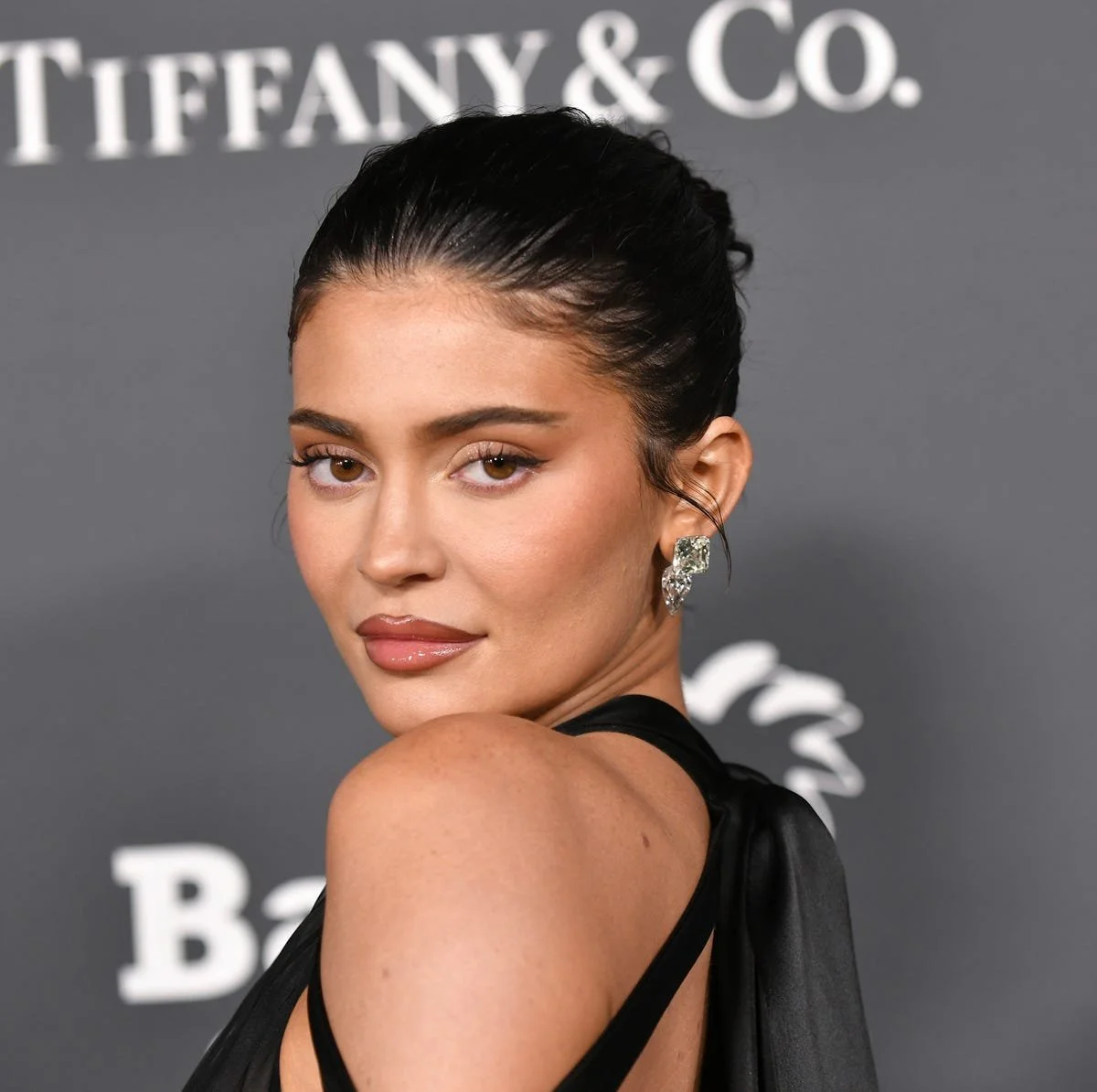
Kylie Jenner’s polished red-carpet look reflects the celebrity beauty ideals we encounter every day.
Preventing Aging Before It Begins
As a 23-year-old woman, my biggest skincare dilemma is trying to get rid of the hormonal acne pimples that linger around my cheeks and forehead. For others, however, anti-aging is their top priority… even at 23. I have several friends who got their first Botox injections at age 20 (crazy, I know) because they have been led to believe that starting now will keep their skin looking 20 and wrinkle-free for the rest of their lives. I’ve had friends under 25 go in for lip filler and leave with chin filler and Botox around their lips because the nurse told them it “would help.”
But my question is… help what, exactly?
We’ve gone from getting work done because people need it to getting work done to PREVENT needing work done in 20 years. There’s this pressure to correct any potential sign of imperfection to prevent any perceived sign of aging from developing in the first place. Is this really about feeling empowered and confident, or is this pressure from a culture that teaches young people to fear looking older?
With Instagram and TikTok feeding us thousands and thousands of pieces of content a day, beauty has turned into a constant visual competition. We’re being fed filters, Facetune, celebrity before-and-after transformations, and 20-step influencer beauty routines that are creating unrealistic expectations of what people should look like. The issue here is that we’re constantly seeing images that don’t reflect how people actually look. How are we supposed to compare our plain, boring selves to women who spend tens of thousands of dollars, or more, on facelifts, Botox, boob jobs, and BBLs? Do we want to look like them to make ourselves feel better, or is it because we’re all so addicted to this idea of looking better and chasing an unattainable ideal of beauty?
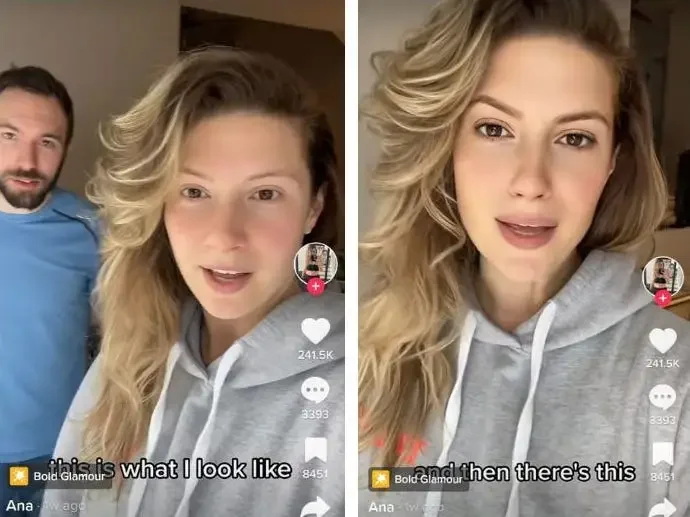
A beauty filter transforms the same face, blurring the line between everyday appearance and an online ideal.
The Business of Insecurity
At the end of the day, the people benefiting most from the rise in cosmetic procedures and increasingly elaborate makeup and skincare routines are the companies and individuals profiting from our desire to look better. In its 2025 report, McKinsey & Company described the global beauty industry as a roughly $450 billion market. Its updated forecast projects that skincare, cosmetics, haircare, and fragrance will together reach approximately $590 billion by 2030. In other words, the beauty market is expected to grow by about a third by 2030.
The beauty industry is, in many ways, the business of insecurity. Beauty companies are selling us a cure for an insecurity they’re helping create. New products and procedures are often positioned as solutions to problems we may not have even noticed until someone pointed them out. For example, a friend of mine went in to get lip filler, and her esthetician suggested she also get chin filler and Botox, explaining how easy the additional procedures would be and how much they could help her. She made my friend feel insecure about things she hadn’t even considered to be issues, ultimately profiting from two additional procedures on top of the lip filler. Are we buying these products and paying for these procedures because they genuinely make us feel good, or because we’ve been convinced that our natural appearance is no longer beautiful enough in this day and age?
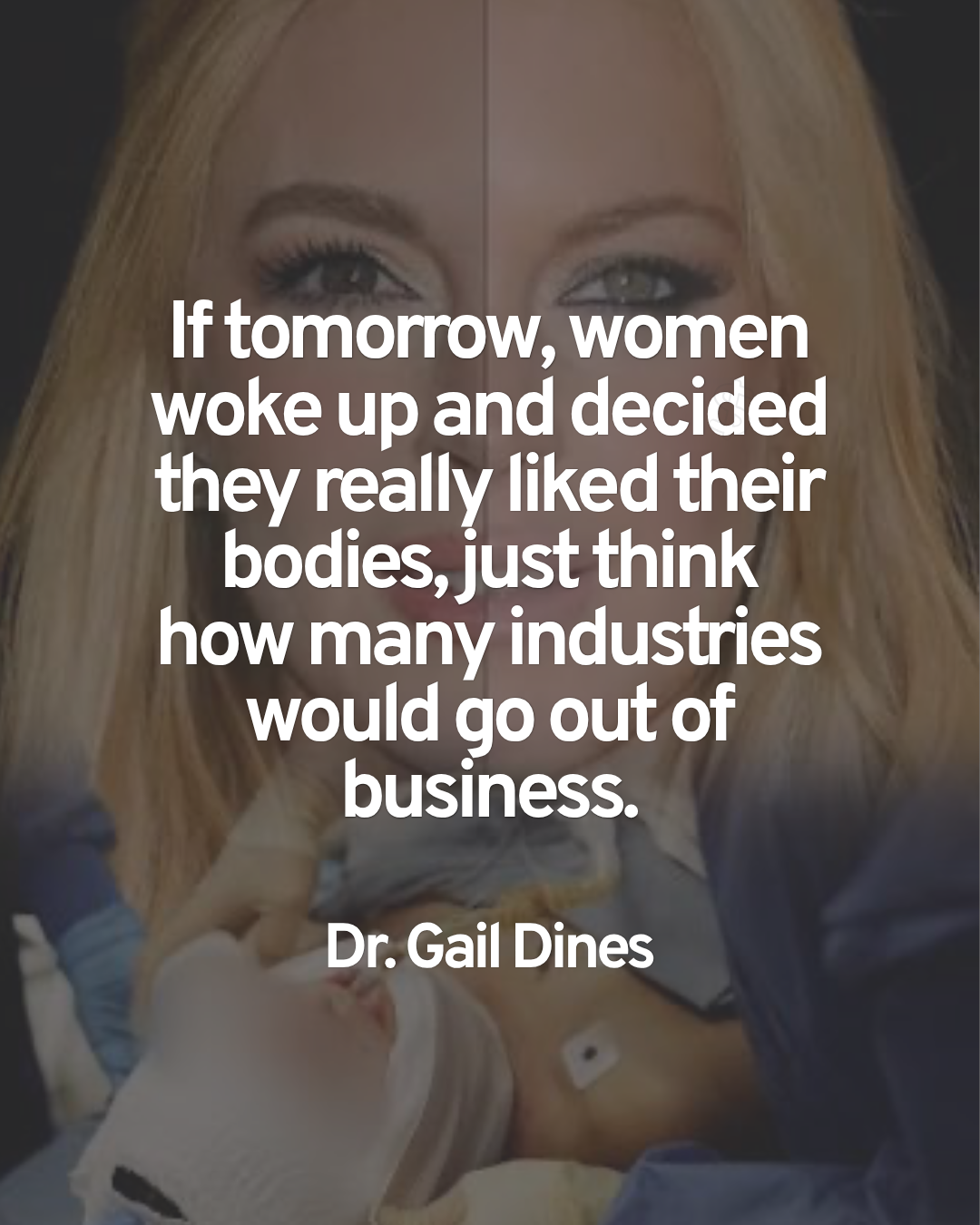
This quote, attributed to Dr. Gail Dines, asks how much business depends on women feeling dissatisfied with their bodies.
When Self-Care Becomes Pressure
Is it really called self-care anymore, or is it self-obsession? We’ve been convinced that self-care needs to be a nightly ritual consisting of 15 different products to even qualify as self-care. Because if you just use lotion and face wash, you’re lazy and not taking care of yourself. You’re only really having a “self-care night” if you buy the full Rhode collection and eye patches for $25 a pop, successfully filling Hailey Bieber’s pockets with cash. Now, don’t get me wrong… I do think that self-care and beauty treatments can be enjoyable, confidence-boosting, and genuinely empowering. I can also acknowledge that the beauty companies and med spas are the ones who truly profit from these procedures and from that enjoyment. The bigger issue, however, is when wanting to look good turns into feeling like you can never look good enough. That is when your beauty routine stops being an act of self-care and starts becoming another source of stress and pressure.
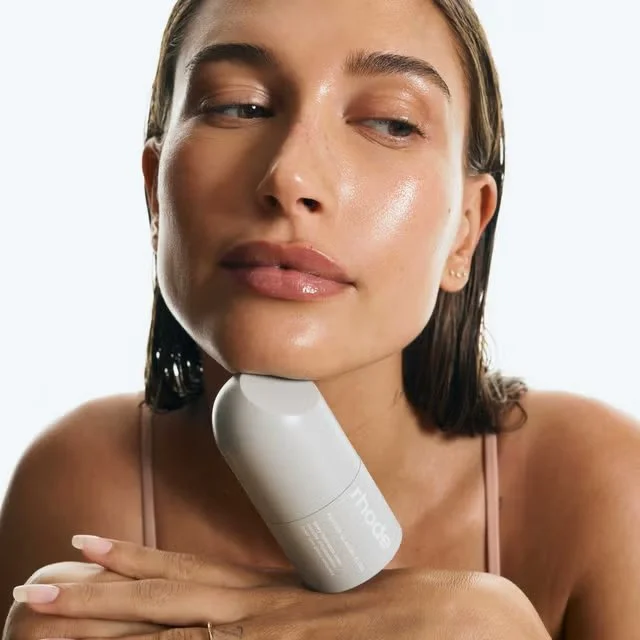
A glowing complexion and a Rhode product turn the promise of self-care into an aspirational beauty image.
Can We Just Let Ourselves Age?
As a Gen Z woman, growing up in the early 2000s, I used to watch the Kardashians on TV without makeup. These days, it feels like I never catch a clip of them without a full beat. I can see how that shift adds to the pressure surrounding beauty. Compared with previous generations, young people nowadays are constantly exposed to exaggerated beauty standards that are unfortunately unattainable without products or procedures. There is also the idea that we are losing the opportunity to experience aging as a natural process rather than a problem to solve. Looking at celebrities like Nicole Kidman, who looks like she’s 25, reminds me of how, when I was younger, actresses around 60 looked like normal 60-year-olds, which is now a rarity to see. And with this comes the pressure to use anti-aging products and get procedures done before we can even experience any visible signs of aging. Personally, I don’t want to spend my twenties trying to preserve a version of myself that hasn’t even had the chance to age. Aging is a natural process, not a problem to solve.
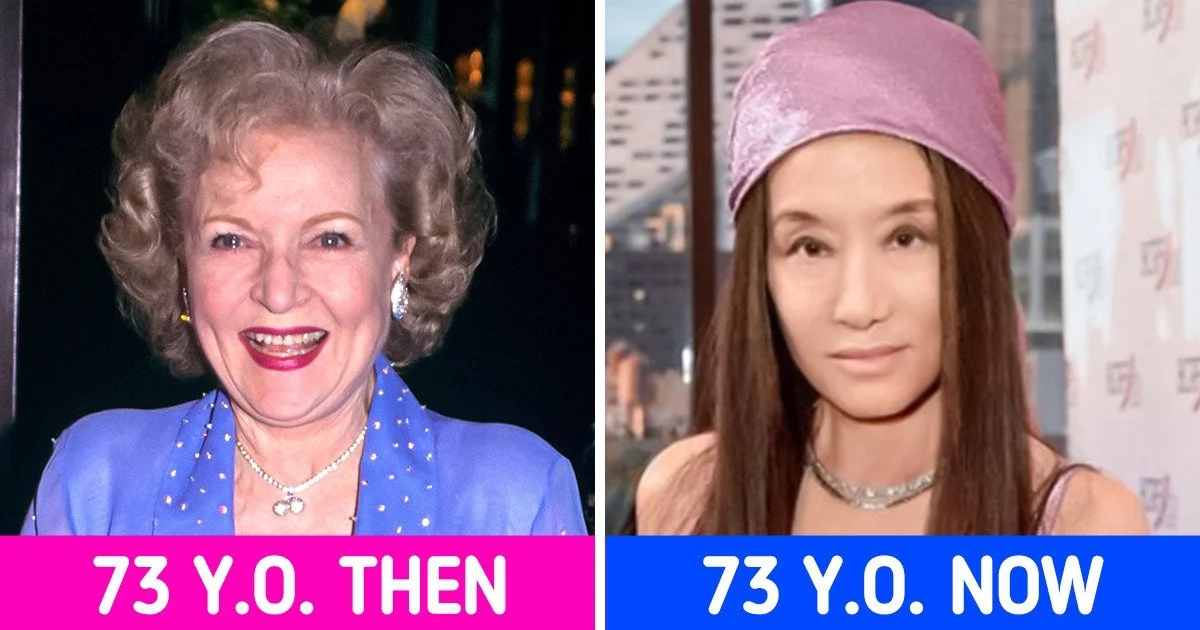
A “then versus now” meme captures the pressure to make aging look increasingly youthful.
If there is always another treatment, product, trend, or feature to improve, when does the pursuit of perfection end? Enjoying doing your makeup or following a nightly skincare routine doesn’t have to mean rejecting your natural appearance or avoiding aging. But I do think we have to acknowledge the fact that we are under more pressure than ever to feel bad about our natural appearances rather than embrace them. Perhaps the real luxury isn’t looking younger, more sculpted, or more polished than everyone else, but feeling comfortable enough with yourself to stop constantly searching for the next improvement.